

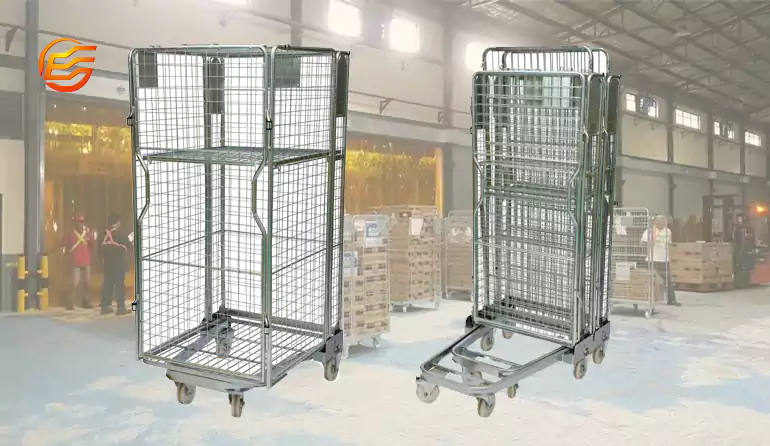
In today’s fast-paced logistics and distribution environment, efficient storage is no longer a luxury—it is a necessity. Warehouses are under constant pressure to handle higher volumes, tighter delivery timelines, and stricter safety requirements. To meet these demands, businesses are increasingly turning to smart storage solutions that improve organization, protect inventory, and streamline operations. One of the most practical and versatile of these solutions is the use of warehouse storage cages.
What Are Storage Cages and Why Do They Matter?
Storage cages are robust, mesh-based containers designed to hold, protect, and transport goods within a warehouse or industrial facility. Unlike traditional shelving or pallets, cages provide full or partial enclosure, which helps prevent items from falling, getting damaged, or being accessed by unauthorized personnel. Their open-mesh design also ensures visibility, making it easy to identify contents at a glance and conduct quick inventory checks.
From small spare parts to bulky cartons and high-value items, storage cages can handle a wide range of goods. Their modular nature allows them to be stacked, folded, or moved easily using forklifts and pallet trucks, making them highly adaptable to changing storage needs.
Key Benefits of Using Storage Cages
1. Improved Organization
Storage cages help create clearly defined storage zones within the warehouse. Different cages can be assigned to specific product categories, departments, or workflows. This structured approach reduces clutter, minimizes misplaced inventory, and speeds up picking and packing processes.
2. Enhanced Security
One of the biggest advantages of enclosed cages is better inventory security. Many models come with lockable doors, which are ideal for storing high-value or sensitive items. This added layer of protection reduces the risk of theft and unauthorized access.
3. Better Space Utilization
Storage cages are designed for vertical stacking, allowing warehouses to make full use of available height. This is especially useful in facilities where floor space is limited. Stackable cages also support more efficient layout planning and smoother material flow.
4. Operational Flexibility
Cages can be easily relocated as storage requirements change. Foldable designs save space when not in use, while mobile variants on wheels enable quick internal transport. This flexibility makes them suitable for both permanent storage and temporary staging areas.
Types of Storage Cages for Different Needs
Industrial Applications
For heavy-duty environments, industrial storage cages are built with reinforced steel frames and thicker wire mesh. These cages are capable of handling substantial loads and are commonly used in manufacturing plants, automotive facilities, and large distribution centers. They are ideal for storing tools, components, raw materials, and finished goods.
Specialized Storage Requirements
Some industries require tailored solutions for unique products or workflows. In such cases, specialty cages are designed with custom dimensions, internal partitions, or special coatings. For example, pharmaceutical warehouses may use cages with antimicrobial finishes, while electronics manufacturers may need anti-static designs.
Laundry and Textile Handling
The hospitality, healthcare, and garment industries rely heavily on efficient textile management. A dedicated laundry cage is used to collect, store, and transport soiled or clean linens in a hygienic and organized manner. These cages are often lightweight, corrosion-resistant, and easy to clean.
To further improve efficiency, many facilities use a laundry cage trolley. This mobile version of the cage allows staff to move large volumes of textiles quickly between laundry rooms, storage areas, and distribution points without manual lifting.
For high-volume operations such as commercial laundries, industrial laundry cages offer extra capacity and durability. They are designed to withstand frequent handling, heavy loads, and repeated washing cycles.
Choosing the Right Storage Cage
When selecting storage cages for your facility, consider the following factors:
- 1. Load capacity
- 2. Dimensions
- 3. Mobility
- 4. Security features
- 5. Material and finish
Conclusion
An organized and secure warehouse is the foundation of a smooth supply chain. Storage cages provide a smart, flexible, and cost-effective way to manage inventory across a wide range of industries. Whether you are handling heavy industrial components, sensitive products, or large volumes of textiles, the right cage solution can significantly improve efficiency, safety, and overall productivity. Investing in quality storage cages today is a strategic move toward a more streamlined and future-ready warehouse operation.